
A console beside the television, a cartridge in your hands, and the question: “Who goes first?” Dendy’s story connects a Japanese gaming platform with Russia’s market of the 1990s and the creation of a recognizable local brand around an existing world of games.
Famicom, NES, and the cartridge idea
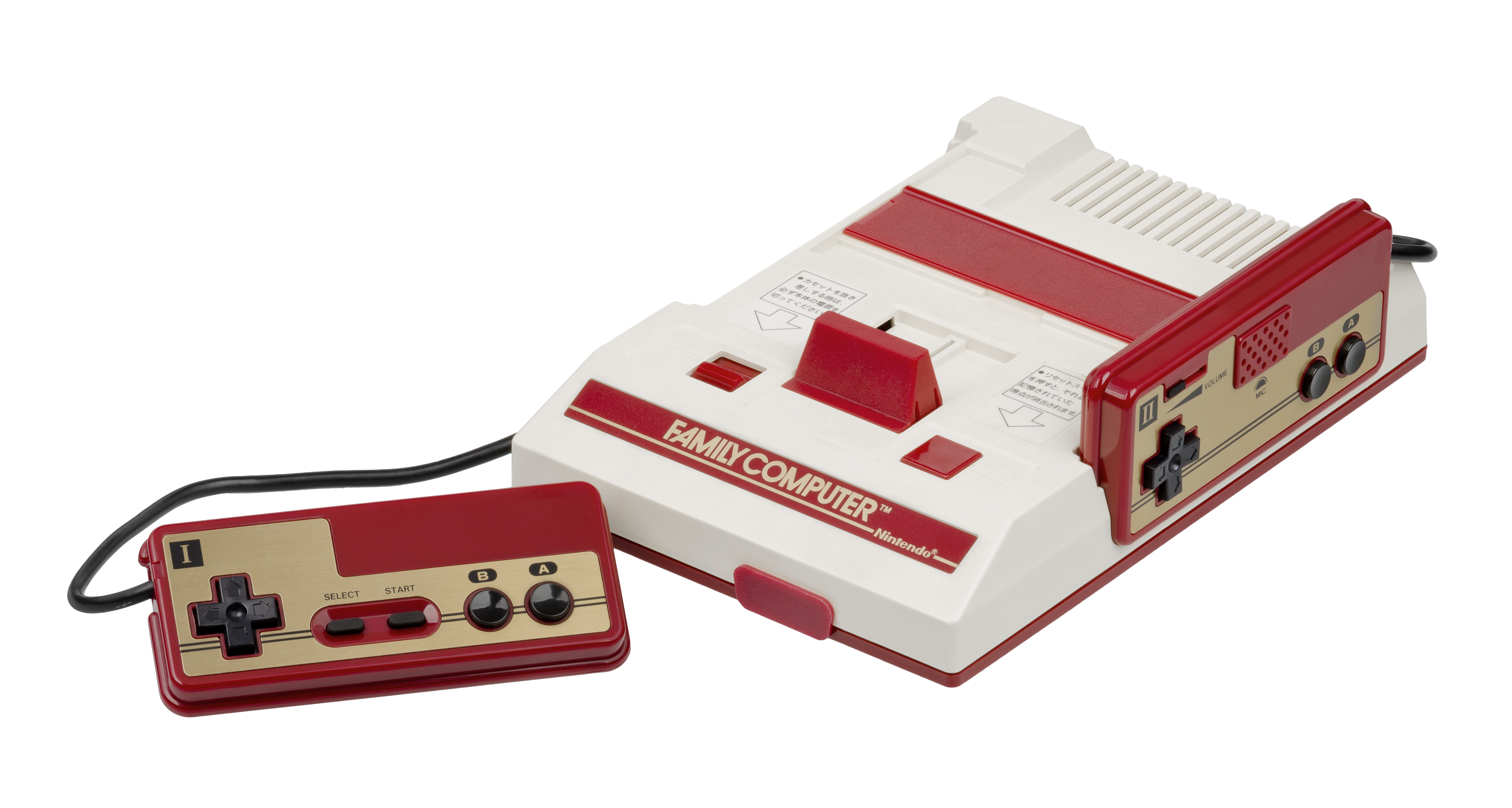
The hardware lineage begins with Nintendo’s Family Computer, or Famicom, released in Japan in 1983. Outside Japan, the related platform became known as the Nintendo Entertainment System, or NES. These names help explain where games came from, although the machines had different cases and sales histories.[1]
In a Nintendo interview, designer Masayuki Uemura recalled a brief to create a machine for home televisions with interchangeable cartridges. That mattered: the console stayed, while a separate medium brought each new game world. Buying another game no longer meant replacing the hardware itself.[2]
1992: a name of its own
The Russian brand’s creation is associated with Viktor Savyuk and Steepler. In an interview, Savyuk described seeking support in 1992, reaching an agreement with the company’s management, and starting its video-game department. Dendy became a distinct trade name for Nintendo-compatible hardware, rather than the name of a new game or genre.[3]
For a prospective owner, the proposition was simple: connect the box to a television, insert a cartridge, and play. A brand brought packaging, advertising, shops, and a recognizable identity around those actions. Its commercial story is therefore different from the engineering history of the underlying platform.
A December arrival
Kommersant’s report of 21 December 1992 confirms Dendy’s arrival at Steepler’s warehouses. It describes wholesale sales, a bundle containing game software, and a coupon for a catalog of additional games delivered by post. This contemporary record reveals that even finding the next game could involve a paper catalog.[4]
A cartridge was both software and an object to examine, choose, and bring to a friend’s home. An old label does not always identify an exact release today. In this library, the original game title is the main reference point, while versions are kept separate from the main game entry.
An elephant and a new gaming routine
Savyuk’s account for Secretmag describes Ivan Maximov’s work on the elephant mascot, the Video-Ass Dendy magazine, and the New Reality television program with Sergey Suponev. This promotion introduced audiences to home video-game culture as well as to a particular device name.[5]
A televised playthrough, a magazine description, and a friend’s recommendation offer different paths into the same game. One player pursues a high score; another enjoys a character or an unusual level. A retro catalog has a similar task: make the entrance inviting while leaving room for discovery.
A second controller changes the evening
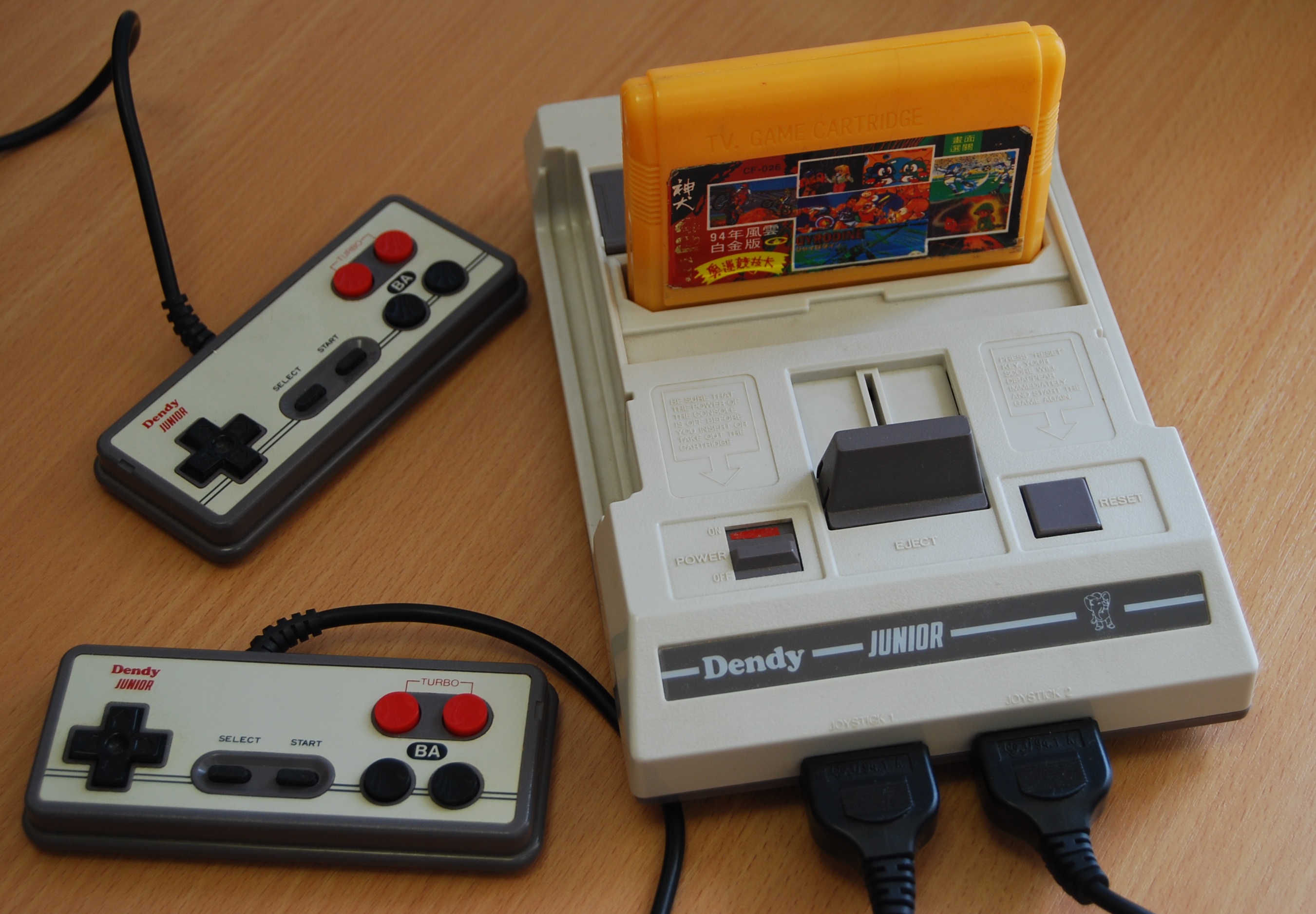
Two controllers make shared play possible, but the software sets the rules. Players may act simultaneously, take turns after an attempt, or compare results. A “2 players” option alone does not mean two characters will move at the same time.
Check the game mode and agree on controls before starting. For two people sharing a device, testing both sets of buttons first is useful. Sometimes the best part is explaining how to get through a section that once seemed impossible, then watching a friend solve it differently.
Beyond eight bits
The market continued to change. In November 1994, Kommersant reported an agreement involving distribution of original Nintendo products and plans to supply Super Nintendo systems. This was a distinct business phase; it should not be projected backwards onto the origins of all eight-bit Dendy hardware.[6]
A 1995 report discussed falling eight-bit hardware prices and the development of regional stores. The historical picture is more complicated than uninterrupted growth: brand recognition, hardware availability, and a company’s position could move at different speeds.[7]
Leave room for a first impression
Photographs distinguish real objects from stylized memories. Contemporary reporting shows what was sold and discussed. Participants’ interviews explain intentions while remaining personal recollections. This article combines those kinds of evidence, instead of treating a number repeated in a later retelling as the sole measure of success.
The next step is to open a game and give it time. Notice how it teaches actions, rewards decisions, and demands patience. Familiar sounds and small characters may revive memories. It can be even more rewarding to have someone beside you who is discovering this world for the first time.
Sources
- Nintendo: official company and Famicom history.
- Iwata Asks: Bringing Video Games Home. Nintendo interview with participants in the hardware’s development.
- Interview with Viktor Savyuk, 2017. The brand creator’s account, in Russian.
- Kommersant, 21 December 1992. A contemporary report of Dendy reaching the market, in Russian.
- Secretmag: Viktor Savyuk on creating Dendy. Participant’s recollections, in Russian.
- The Steepler–Nintendo agreement, 1 November 1994. Contemporary reporting, in Russian.
- Dendy’s regional strategy, 2 November 1995. Contemporary business reporting, in Russian.